
My Role
- UX/Product Designer
Company
- Ondpitch
Timeline
- 2024-2025
Deliverables
- Product Design
- Product Strategy
- UI/UX Design
Summary
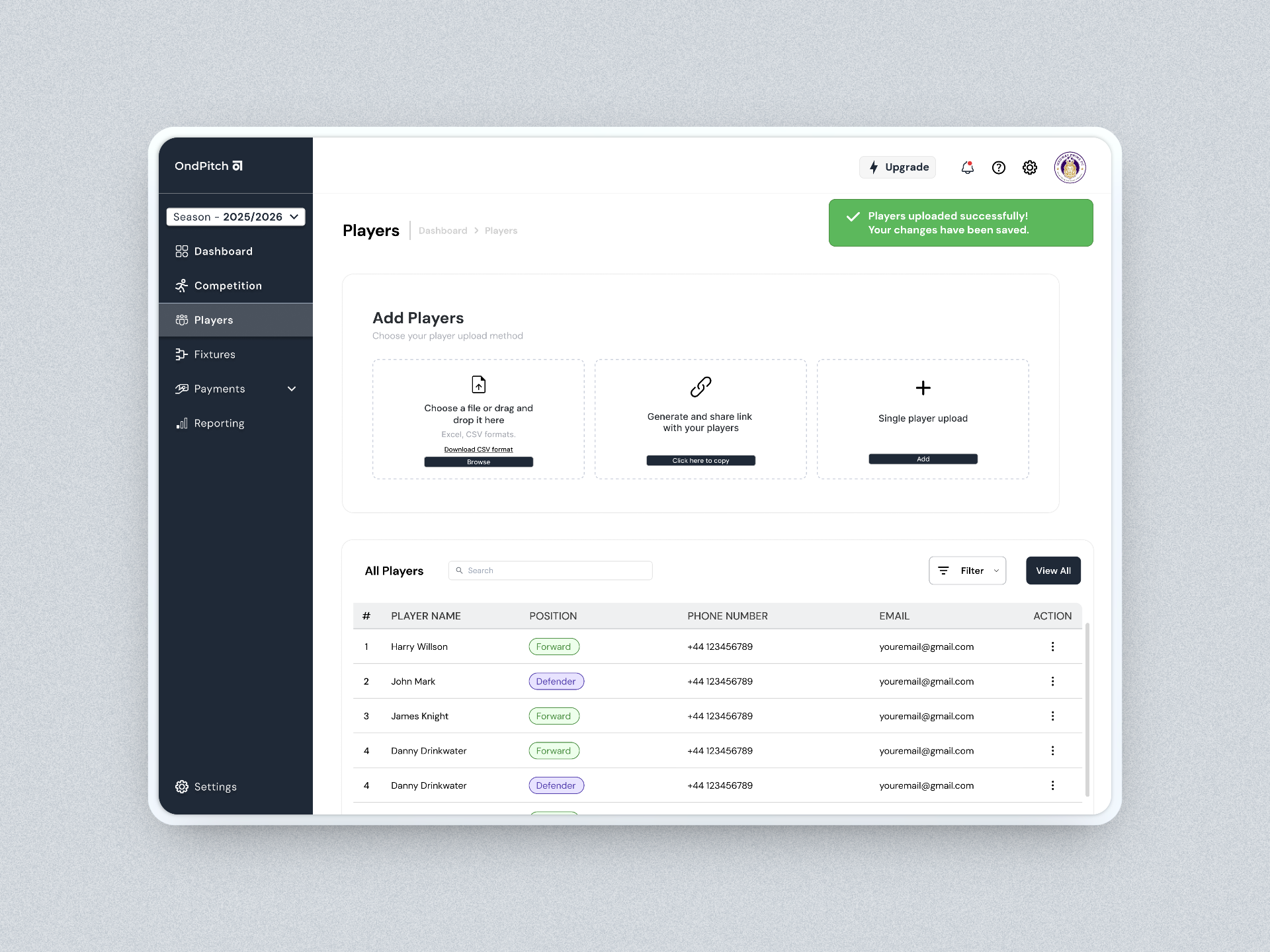
This case study focuses on how I redesigned the player onboarding experience for ONDpitch, a grassroots football finance platform. Team managers were struggling to add players quickly, especially those with large rosters or limited technical skills. To solve this, I designed three flexible methods: uploading players via CSV, adding them manually, or inviting players through a shareable registration link.
Through user interviews and testing, I learned that different teams had different workflows, so offering multiple entry points was essential. The result was a more intuitive, mobile-friendly experience that reduced team setup time by 66% and saw rapid adoption of the shareable link feature.
This redesign not only streamlined onboarding but also empowered teams to get started faster and stay engaged with the platform.
This bottleneck was affecting onboarding success, which resulted in fewer active teams and reduced platform engagement.
Problem
Grassroots football team managers needed a way to add their players to Ondpitch. However, our early flow was time-consuming, confusing, and led to high drop-off rates.
Some teams had large player rosters stored in Excel. Others only had basic information or wanted players to self-register. Managers often complained about having too much admin work just to get started.
This bottleneck was affecting onboarding success, which resulted in fewer active teams and reduced platform engagement.
Goals
The goal was to design a flexible, intuitive, and scalable player onboarding experience that:
- Supports bulk uploads for teams with existing player data
- Enables easy manual entry for low-tech users
- Allows players to self-register via a shareable link
- Works smoothly across devices
Success meant faster team setup, reduced confusion, and more players actively using the platform.
Research and Insights
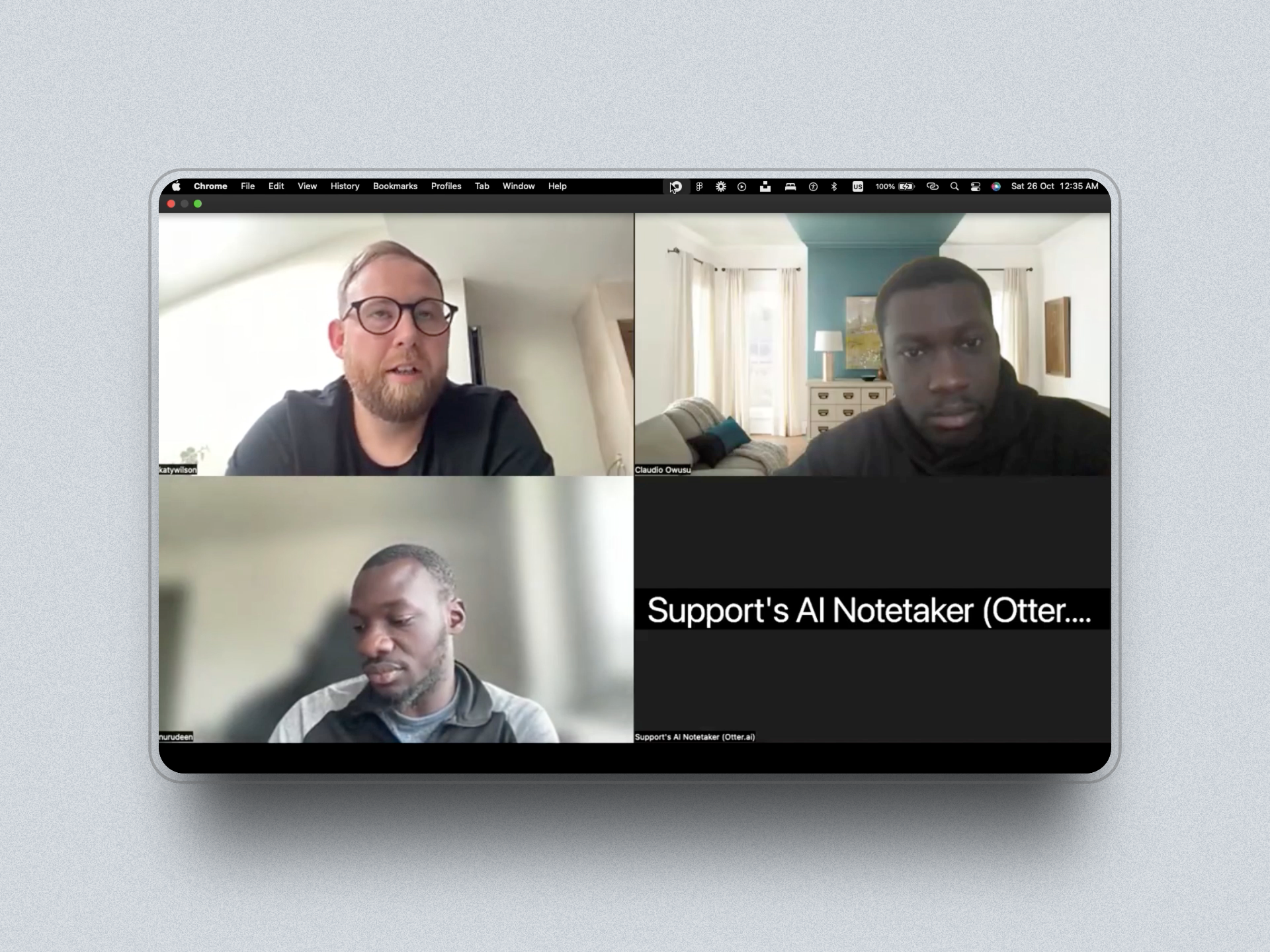
I interviewed six team managers across different clubs. Four of them used spreadsheets to manage their rosters. Two didn’t have any digital lists and relied on memory or WhatsApp groups. All of them wanted to get started quickly without training or tutorials.
Key pain points included:
- “I don’t want to type in 20 names one by one.”
- “Some players don’t give me their phone numbers. Can’t they just join themselves?”
- “Where do I even start?”
My Process
Wireframing
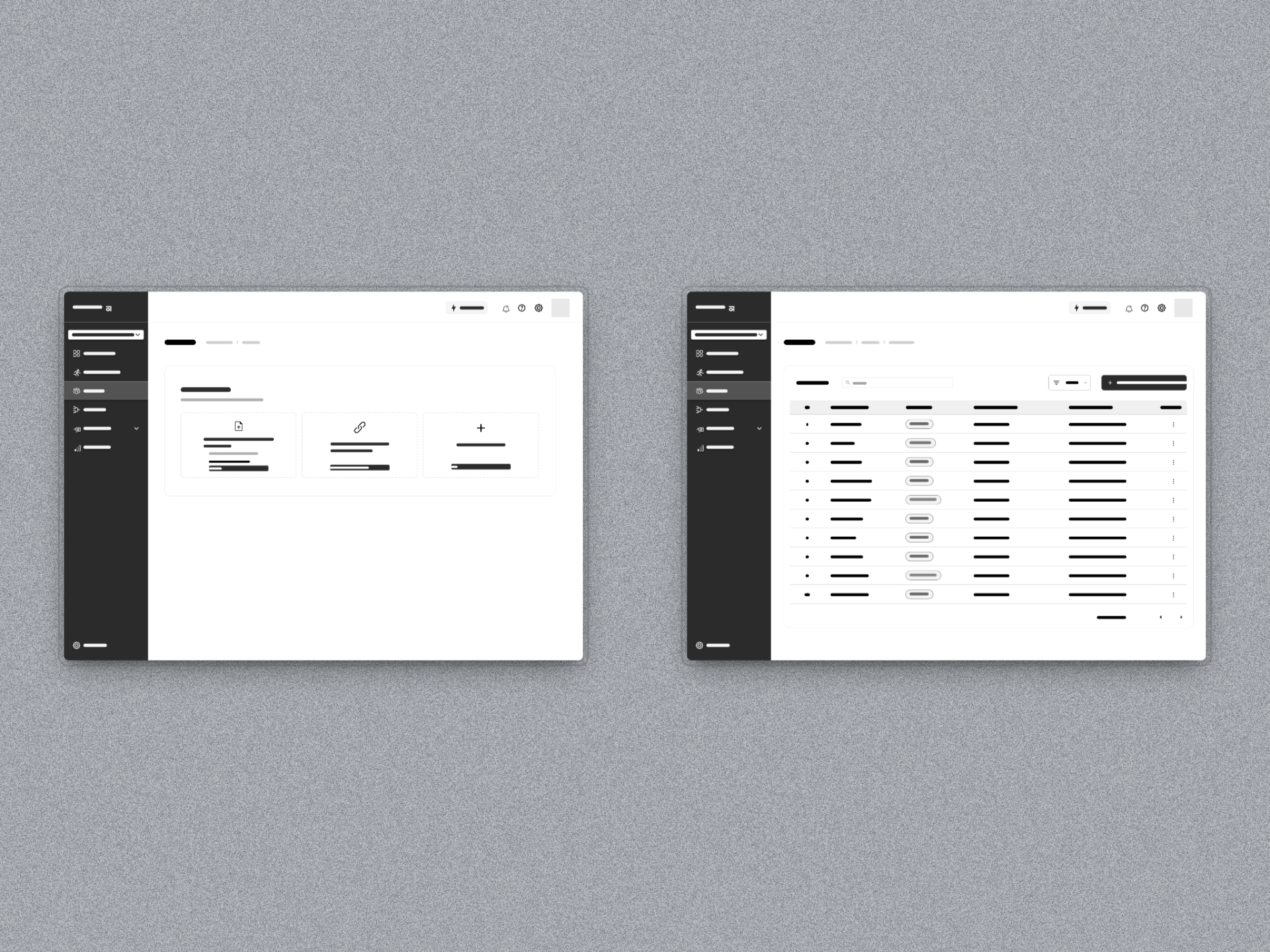
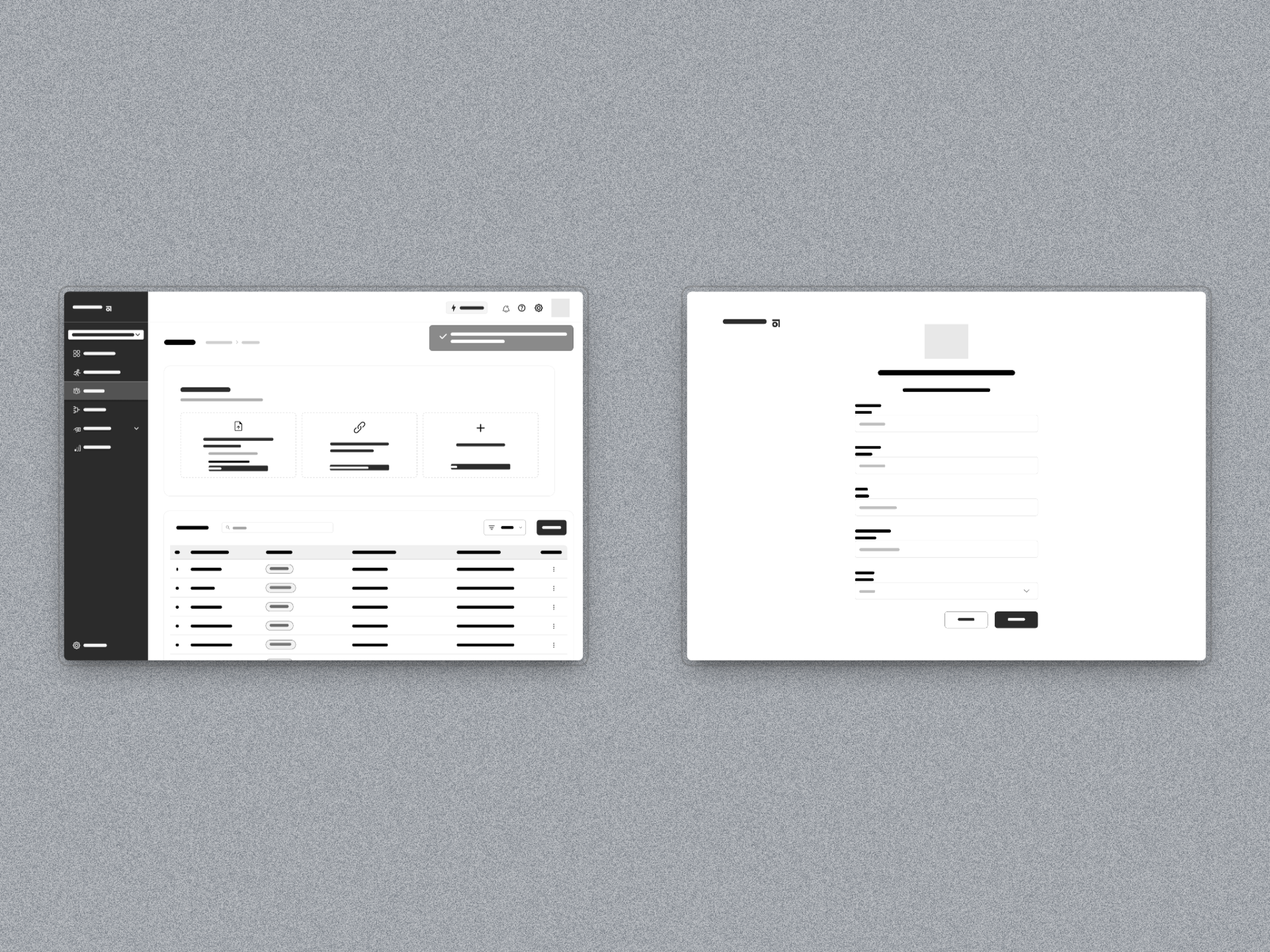
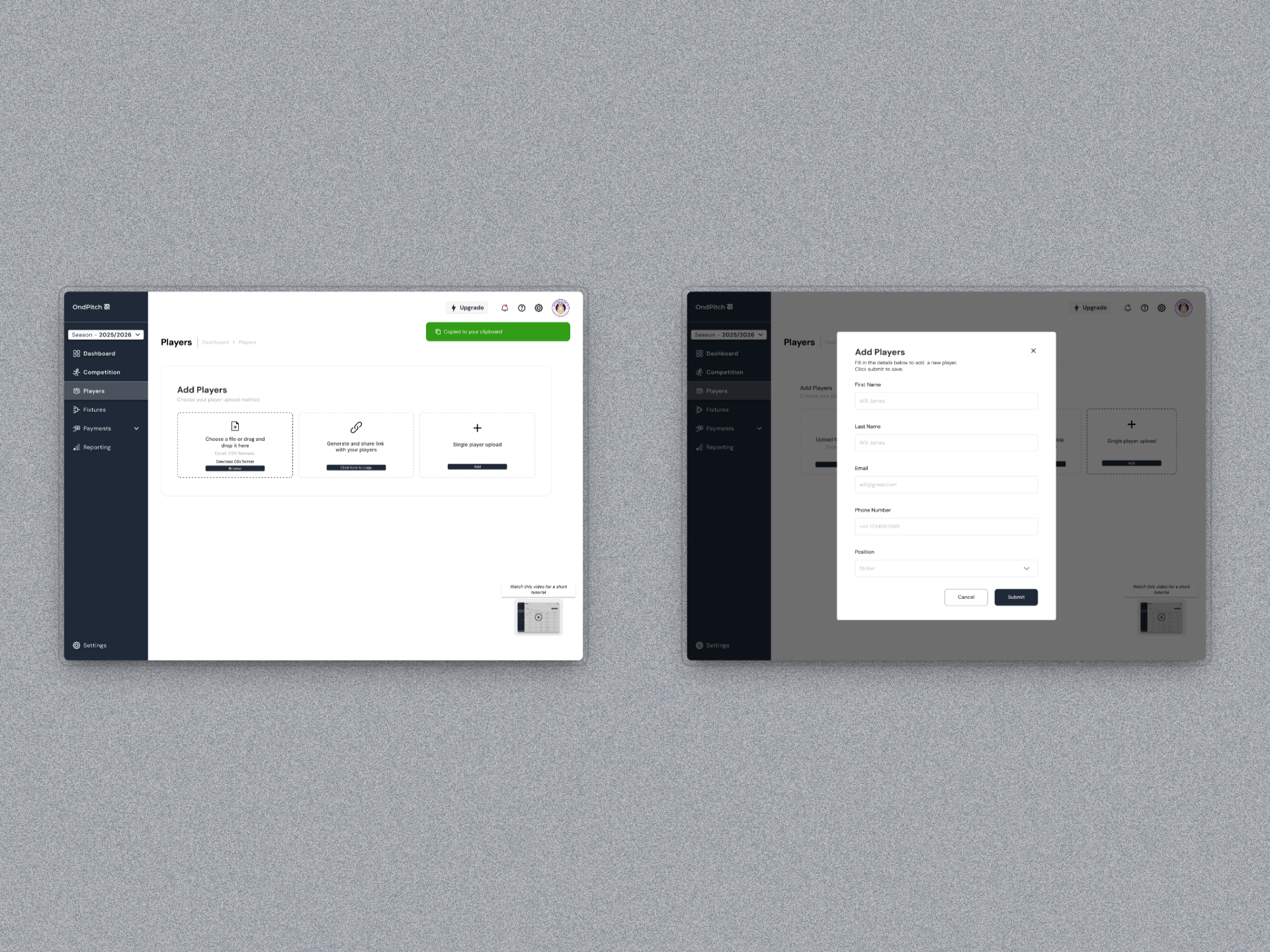
I mapped out three entry paths:
- CSV Upload
- Manual Entry (one-by-one)
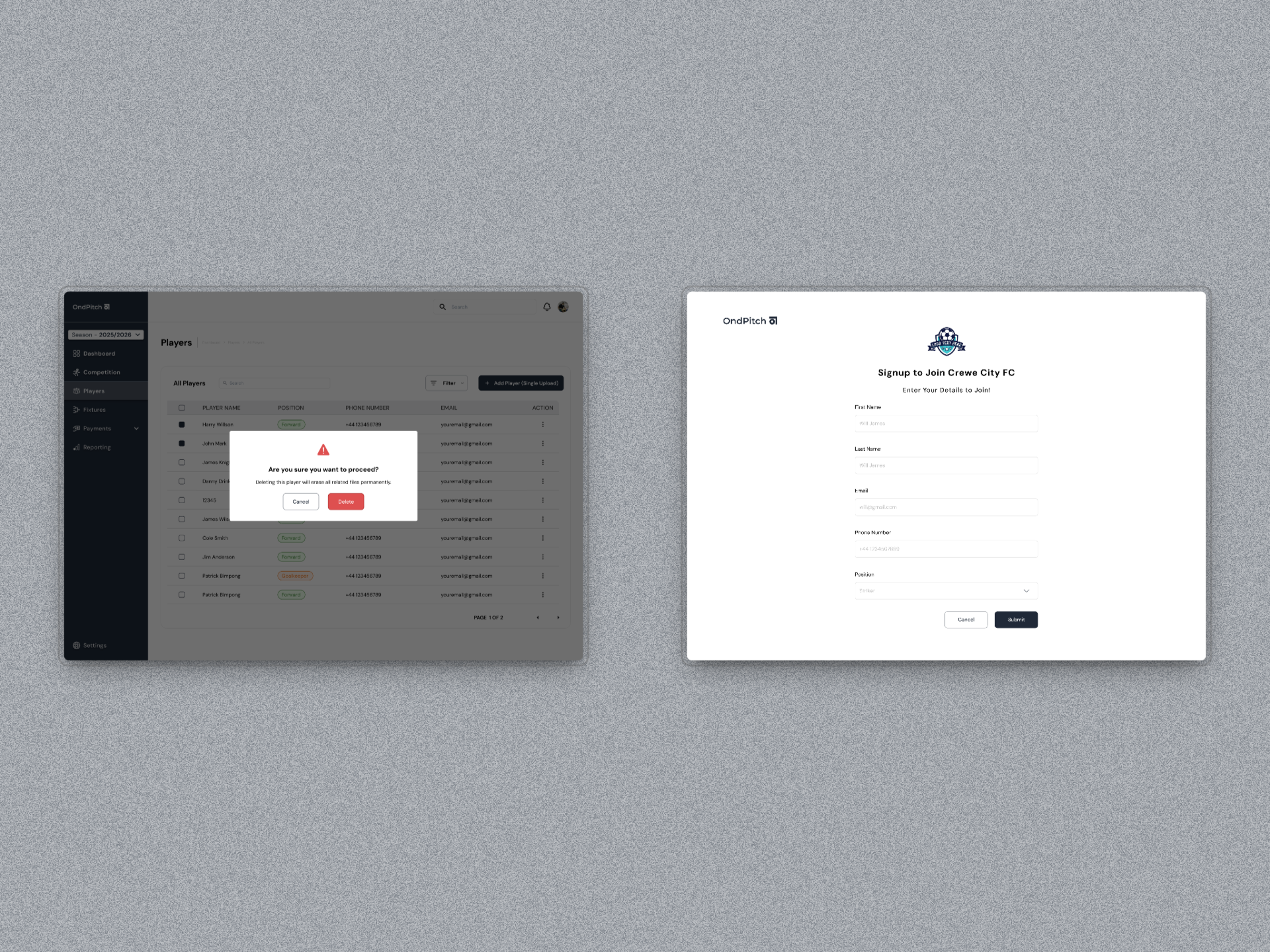
- Shareable Link (player self-registration)
Each path included clear guidance and fallback options.
From this, I defined three key user types:
- Digital admins with player data
- Manual admins with low-tech setups
- Self-service managers who prefer players to register themselves
Visual Design
I prioritized:
- Clear icons and labels
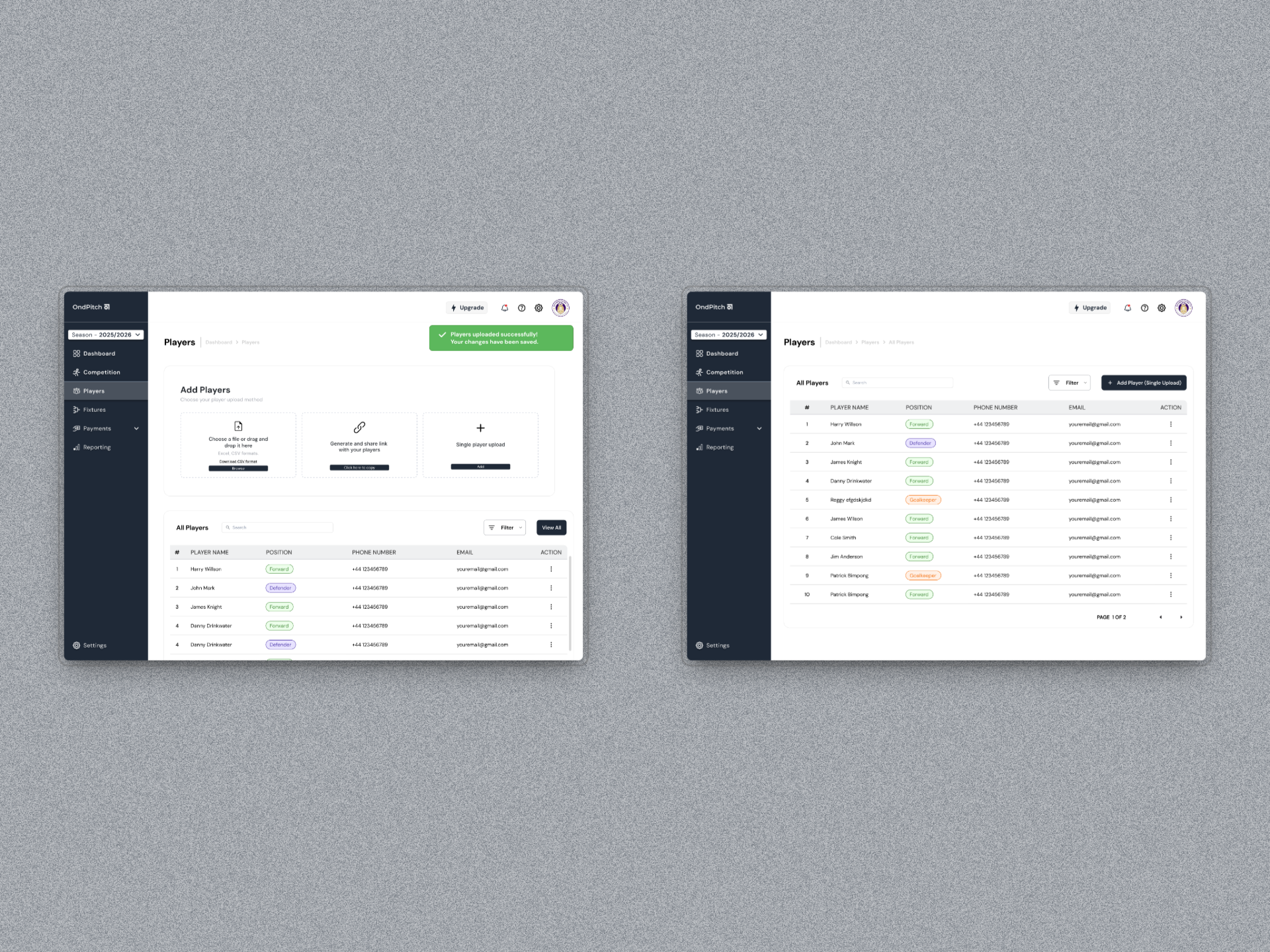
- Step-by-step feedback such as upload success and validation messages
- Mobile-friendly layout for managers in the field
Usability Testing
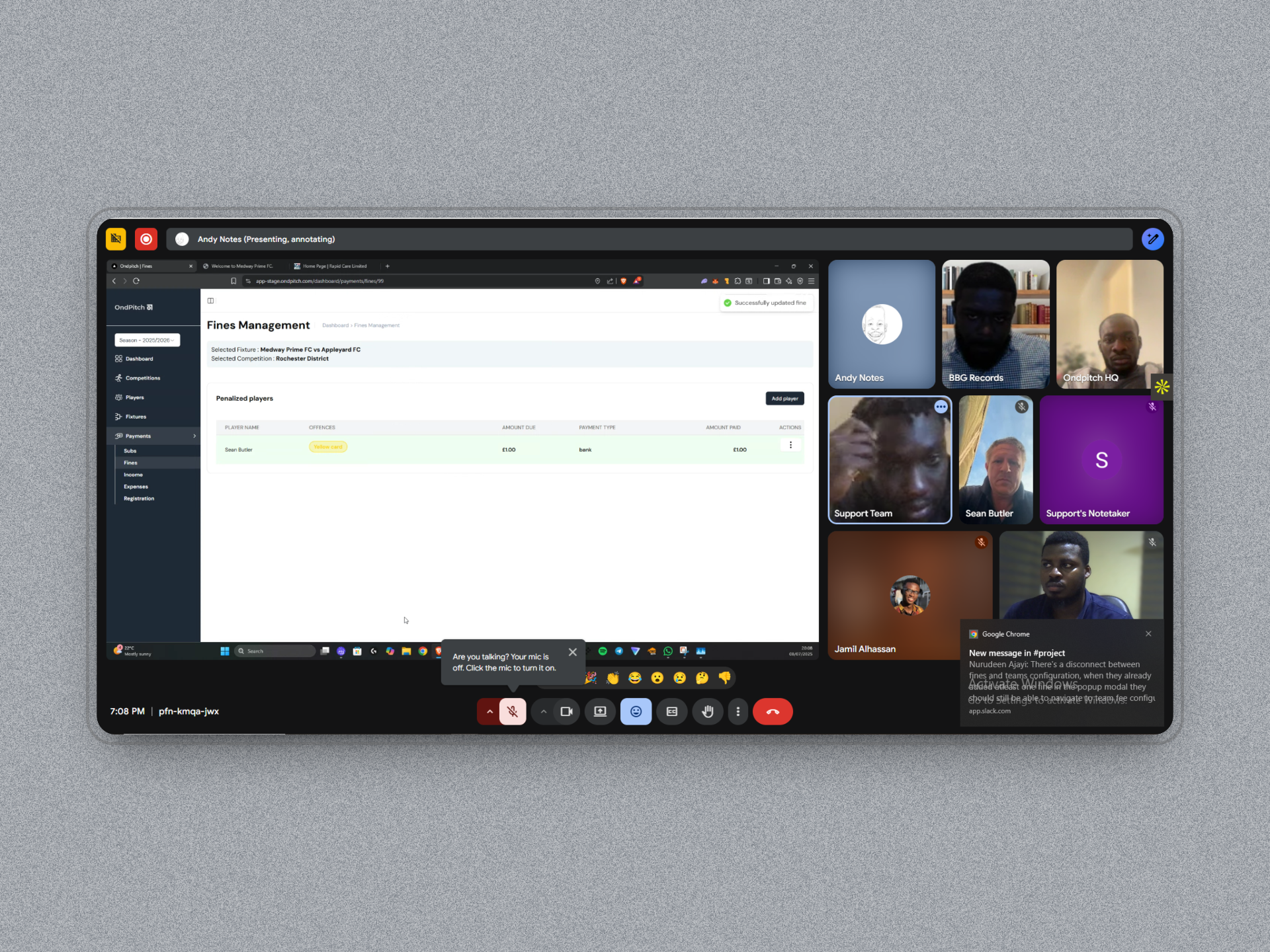
I tested the flow with three team managers using Figma prototypes.
- The CSV flow was intuitive for those with files
- The manual flow worked well on mobile
- The shareable link was the favorite. It felt modern and less stressful
Improvements made after testing included:
- Adding tooltips for required fields
- Including a file format preview before upload
- Optimizing the link registration page for mobile using autofill and smart hints
Solution
Users can now choose one of three ways to add players:
- Upload a CSV File
Perfect for teams that already have their rosters in Excel. Includes a simple template and drag-and-drop functionality.
- Share a Join Link
Team managers can send a link to players, allowing them to enter their own details. The system automatically organizes them under the correct team.
- Enter Players Manually
Ideal for adding one to five players quickly. The experience is optimized for mobile.
All flows funnel into a unified player list, eliminating concerns about duplicates or formatting issues.
Results
- Reduced average team setup time from 15 minutes to 5 minutes
- Over 75% of teams used at least two methods to onboard players
- The shareable link had a 60% adoption rate within two weeks of release
- Positive feedback included:
The link is a lifesaver. My players joined themselves while I was at training.
George
Medway Prime FCWhat I learned
- Flexibility is essential. One approach does not work for every team
- Testing with real users is more valuable than assumptions
- Admin users often multitask, so mobile-first clarity is critical
Final Thoughts
This feature directly supported Ondpitch’s mission:
To make team finance and player management easy for grassroots clubs regardless of their size, tech skills, or resources.
By offering multiple ways to add players, we transformed a major blocker into a smooth, intuitive entry point. This helped teams get started faster and feel more in control.