
My Role
- UX/Product Designer
Company
- Ondpitch
Timeline
- 2024-2025
Deliverables
- Product Design
- Product Strategy
- UI/UX Design
Summary
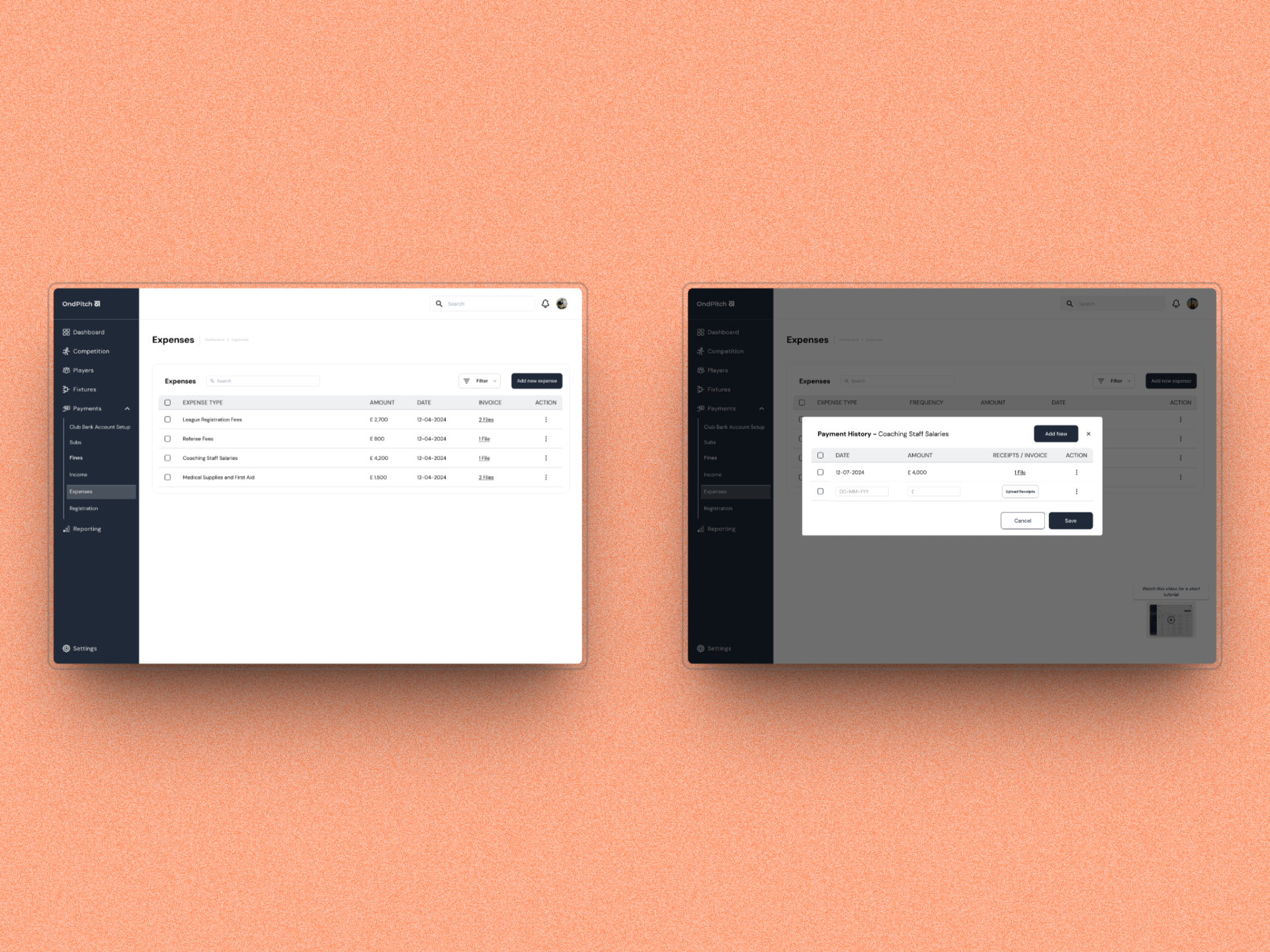
This case study explores how I designed the Expenses feature for Ondpitch, allowing grassroots football teams to easily record, track, and organize their team spending. The goal was to replace messy, unstructured tracking methods (like WhatsApp and notebooks) with a simple, mobile-friendly form that supports both one-time and recurring expenses.
Through user research and usability testing, I uncovered the need to support recurring payments, such as weekly pitch bookings. I introduced a toggle that lets team managers set up automatic recurring entries, reducing their workload and helping them stay consistent.
The feature improved transparency, saved time, and empowered teams with better financial visibility. Within the first month, over 200 expenses were recorded, and 30% of those were recurring, a clear sign of success and adoption.
Through user interviews and testing, I discovered that different teams had distinct workflows, making it essential to offer multiple entry points. The result was a more intuitive, mobile-friendly experience that reduced team setup time by 66% and saw rapid adoption of the shareable link feature.
This redesign not only streamlined onboarding but also empowered teams to get started faster and stay engaged with the platform.
Problem
Many grassroots football teams were using WhatsApp chats or notebooks to record their team spending, from buying jerseys to renting pitches. There was no structured way to track where money was going, making it difficult for team managers to maintain accountability or generate simple reports for their teams.
This lack of visibility often led to confusion, misplaced trust, and disorganized team finances.
Goals
The goal was to design an intuitive way for clubs to:
- Record team expenses with minimal friction
- Organize expenses by category (e.g., Equipment, Transport)
- Attach receipts for transparency
- Track recurring costs like monthly pitch bookings or coaching fees
- View a clean log of their financial activity
The focus was on speed, ease of use, and long-term accountability.
Research and Insights
During early user interviews, managers shared that they often forgot to log minor expenses like water, gas, or short rides.
But a major insight came during usability testing:
We pay for training every week. I wish I didn’t have to log it every single time.
Liam
Chronis FCThat moment uncovered a critical opportunity: supporting recurring expenses.
My Process
Flow Design
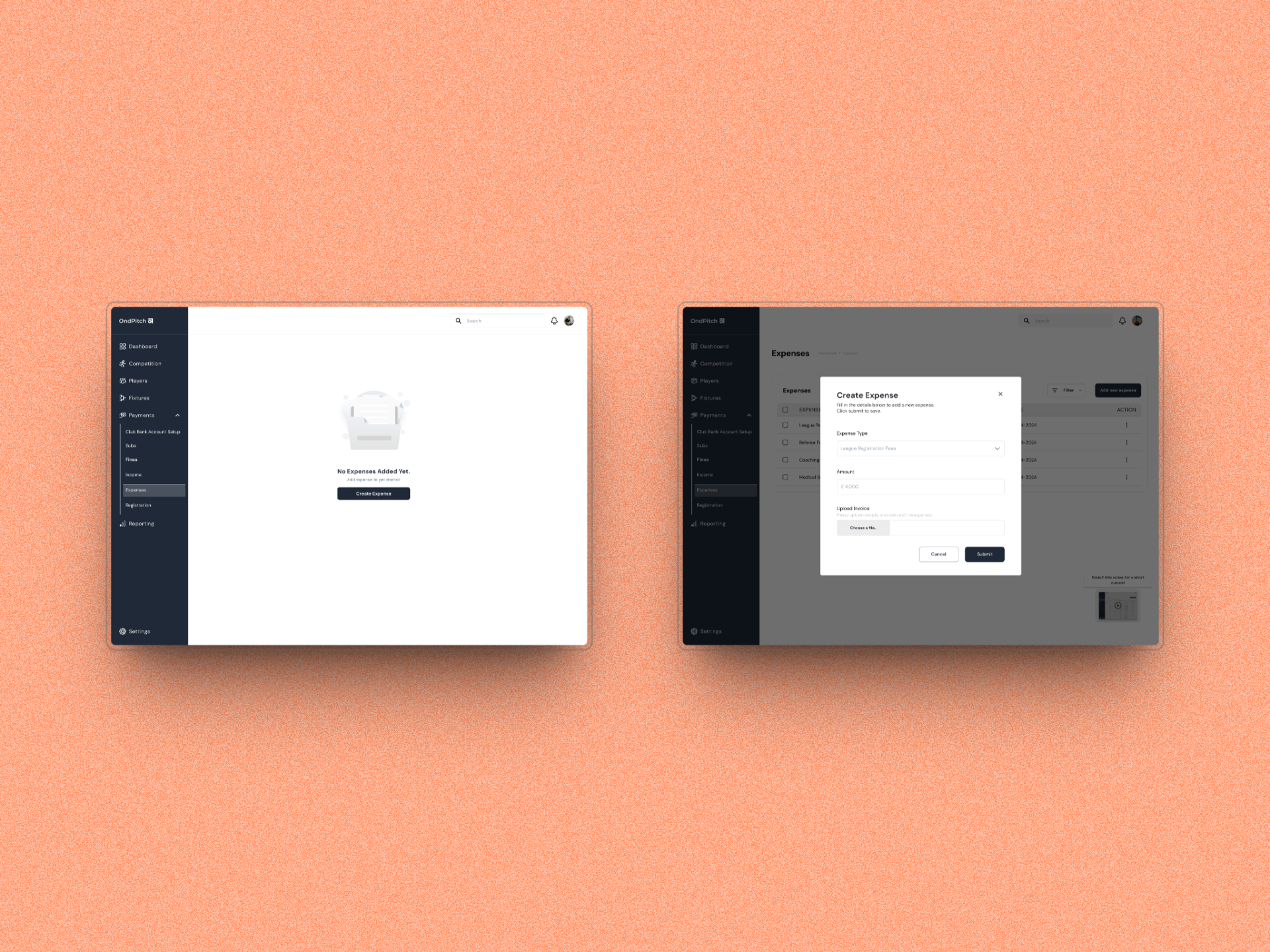
I started with a fast, mobile-first flow that let managers log:
- Expense Type
- Amount
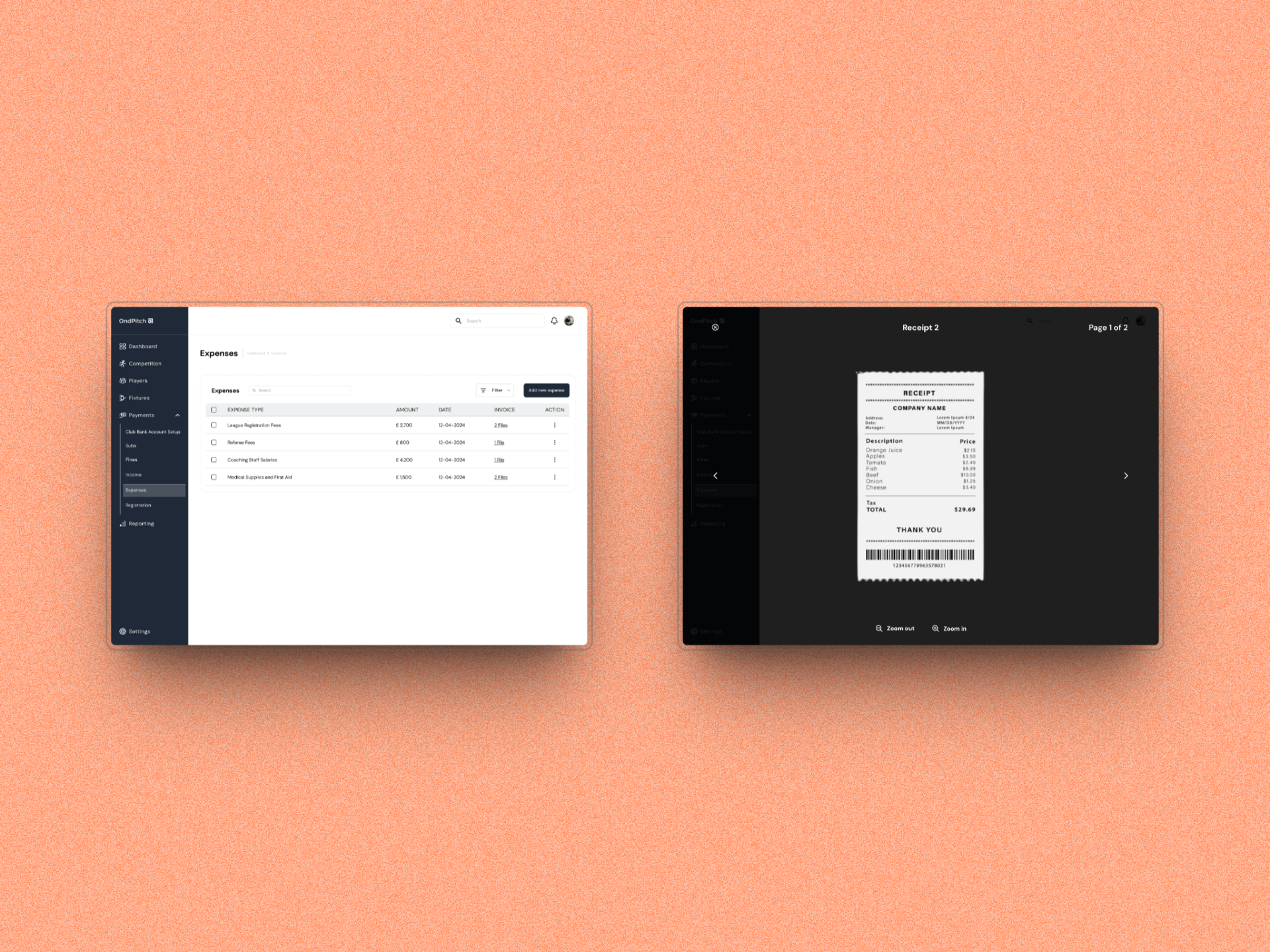
- Receipt (photo upload)
- Optional Notes
- Recurring Option (One-time, Weekly, or Monthly)
The Recurring Expense toggle was added after testing, allowing managers to schedule repeating costs with minimal effort.
Visual Design
The interface used:
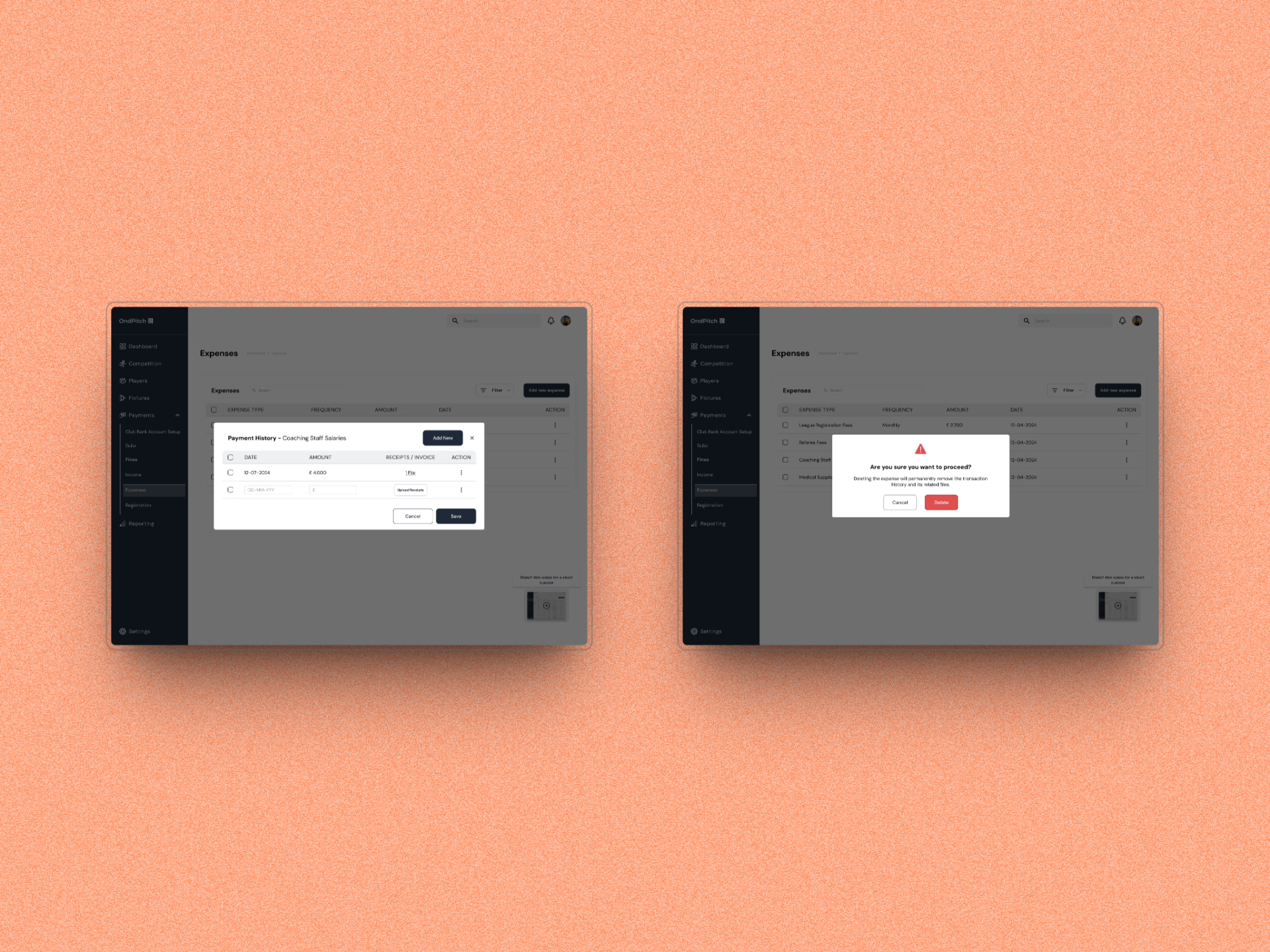
- Smart defaults for currency and date
- Tap-friendly fields for mobile
- Dynamic sections for recurring input such as frequency, start date, and end date
- A confirmation screen with visual feedback
Iteration Based on Feedback
- Pilot users gave feedback like:
- “I love that I don’t have to enter weekly pitch fees over and over.”
- “Can I get a reminder for recurring ones?” (Future roadmap consideration)
This feedback helped me fine-tune the design to balance flexibility with simplicity.
Solution
The final Expenses feature allowed managers to:
- Log one-time and recurring team expenses
- Attach receipts for proof
- Categorize and search past entries
- Spend less time tracking money and more time managing the team
The recurring entry option became a surprise favorite, especially for managers running weekly training or regular transport schedules.

Results
- 50% of early-access teams used the feature in Week 1
- Over 200 expenses recorded within the first month
- 30% of logged expenses were recurring, a strong sign of adoption
- Key feedback:
This saves me time and keeps everything clean. I don’t forget payments anymore
Rustom
Crewe FCWhat I learned
- Listening closely during testing can uncover hidden needs. The recurring idea didn’t come from planning; it came from feedback
- Micro-frictions like re-logging repeated costs can become macro-level pain points
- Grassroots teams appreciate automation as long as it stays simple
Final Thoughts
The Expenses feature transformed Ondpitch from just a payment tracker into a true financial toolkit. By enabling both quick entries and scheduled expense logging, it brought peace of mind, structure, and trust to grassroots teams. It helped them manage their money the way real teams do.